Listen to this chapter
Listen to this chapter
Chapter 13
IT'S BEEN A LONG TIME COMING
Audio narration
0:00/1:34
CHAPTER 13
IT’S BEEN A LONG TIME COMING.
“The wise man is like that, a skillful master of
misfortune. Pain, want, humiliation, prison, exile,
are universally feared; but when it comes to him,
they are tamed.”
— Seneca
I laid on my bed, holding my parole papers in my hand, reading them over and over again. The dormitory was noisy, alive with the same tension and laughter that echoed in all prisons. I was 23 years old now, and I was going home. A young man by age—but the time had hardened me into something older, something born and reborn. I was silent. I was focused. I was ready.
After my last box time for straightening of Leslie, I never returned to solitary. I was sent back to general population in Comstock, finished more college courses, and even ended up in the Honor Block. Me—Jimmy Ace—in the Honor Block. It almost felt like a reward for the Lloydy Massup incident. Seems it wasn’t just inmates who feared him; the correctional officers did too. It was the first time in a long while I felt comfortable to kick back without a worry. It wasn’t that I wanted all my enemies hurt but just the ones that wouldn’t fall in line. There was no room for two bulls in one pen.
Leaving Comstock was hard. Strange, but true. I had built something there—a small, focused band of brothers my age. We called ourselves Jundi’Allah—Soldiers of Allah. Every time the Muslims had a problem, I sent MONARCH 60 a Jundi to handle it, physically if need be. My Islamic studies deepened. I recited Qur’anic verses in Arabic with precision and soaked up every book I could find—philosophy, science, math, world history. I was sharpening my sword in more ways than one. I conversed with older prisoners to get a better understanding of life. I knew nothing but Veer and its orbit.
I was transferred to Franklin Correctional Facility. A medium-security prison tucked up near the Canadian border, where the winters are long and cold, brutal in its own quiet way. It had just opened and me and a band of brothers opened the prison up. Comstock had taught me that a man could adapt to living in danger. Franklin taught me that there are levels to hell. The racism still ran deep, but the guards here were less violent and more… bureaucratic. Still, you had to move smart. They offered college courses through North Country Community College, and since I already came with credits from Skidmore, I enrolled without hesitation.
That’s when they elected me as the in-house Imam. I tried to refuse, but the brothers insisted. I was only 21. I’ll never forget the day the regional Imam visited and said, “You know you’re the youngest Imam in the New York State prison system right now?” I was honored to be in an elite group. My daily task became visiting every dormitory, hearing complaints, and advocating for our rights. The Warden even gave me a special ID to move freely between housing units. Thanks to the efforts of Elijah Muhammad and the Nation of Islam before me, that religious rights were taken serious all over the country.
The irony wasn’t lost on me: every white authority figure I’d encountered up to that point had traumatized me—David Dagio, the white kid who said the gun was mine in junior high, the judge, the lawyers, the prosecutors, the upstate CO’s. And now here I was, having respectful conversations with a white warden, who’d ask, “What do the Muslims need?” I had to articulate for all the Muslims; these interactions would be crucial to my future endeavors because it broke the glass ceiling for me. A man is man be he white or black; I shook the inferiority complex I once held regarding white people. It made me understand the real face of racism—it’s not in words, it’s in power. And the danger lies not in what someone thinks of you, but what they can do to you. David Dagio had power, that’s why he chased and beat us with impunity; same with the guards, they displayed power to do what they wanted to us. That’s racism at its worst— the ability to act on those racist thoughts.
In addition to being Imam, I worked in the pre-release office. I helped brothers get their paperwork in order—birth certificates, social security, housing. I worked closely with the probation officer on-site. It’s crazy how prison, of all places, was where I learned life skills I never got on the streets. It was as if I had to be caged to be taught how to fly.
College became my window to the world. I studied psychology, philosophy, political science, and economics. My writing matured. My thinking evolved. Norm, my guy who caught his case as a juvenile, was also there. He’d earned his degree in psychology. We laughed often—two road men turned students. But we both knew this was no joke. Education was the real breakaway. It gave us language for our pain, words to articulate instead of punches to throw. For so long we were led by not the one with the most knowledge but the one with the most violence.
I asked Mario, my older brother, to send me books on real estate and money management. I promised myself—if I ever got some money again I would never go broke.
In ’85, Mike Tyson’s name started floating in the boxing arena. I remembered him from our juvenile years. Each one of his fights was electric. Tyson repped Brooklyn with that same fury that lived inside me. We’d pile into the TV room just to watch him knock grown men around like rag dolls.
But while I prepared for parole, the streets were changing. Crack had arrived. I’d call home, and my friends were describing a new language, a new hustle. “Remember when Monster Mike was freebasing and y’all took over the Vitamin store?” they’d say. “Well, freebasing is crack! It’s like a TV dinner— cocaine with baking soda.” I verbally agreed like I understood. But I didn’t. Not fully. Not yet.
Back then, New York was handing out life sentences for drug cases. Firsttime offenders doing 5-to-life, 3-to-life. And many of them couldn’t even do math—except when it came to ounces, grams, and counting money. I started to see how the hood had evolved, and not necessarily for the better.
When it came time for the parole board, I was nervous. My mother and sister prayed the way they prayed. I prayed the way I knew how. Since my days with Richard “Dhoruba” Moore, my thinking had shifted. I was no longer reckless. I was reflective. I knew if I got out, I couldn’t go back to the block, because they were looking for a leader and that wasn’t where I wanted to be. But first—I had to make parole.
The probation officer I’d worked with told me not to worry. He had a letter from the Warden in his hand. But I feared my disciplinary record would sink me. After all, I’d been caught up in more than a few cuttings and stabbings. A one-year hit wouldn’t surprise me.
When I walked into that room, two white men and one white woman sat behind a table. They didn’t know me. Only what was typed on that paper in front of them. I hated every second. Their mouths moved, but I couldn’t process what they were saying. “You can leave, Mr. Rosemond,” one of them said. “You’ll get our decision in the mail.”
I walked out like a zombie. Everything—my future, my freedom—was now in their hands. I held onto the rope of Allah.
So here I was, laying in my cubicle, staring at my release date. A date that meant resurrection. I feared the unknown. Old enemies. New ones. Being caught slipping. But I also knew I had to escape the gravity of the old neighborhood. Veer made me, but it could also unmake me. Cadien was home. OttoShine had gotten locked up again. The Untouchables dismantled, Vinny Vance was in prison. Mostly everyone was gone, who wasn’t selling crack was on crack. The streets was a mess.
Then came a small miracle. I was granted a one-day furlough to walk the stage and receive my Associate’s Degree. My mother and oldest brother, Mario, came to witness it. That day felt like an eclipse—something rare and holy. The world was opening up for Jimmy Ace. The same boy who came in rough and wild, was walking across a stage in a cap and gown. We had a little time after the ceremony to get something to eat, it felt weird to get a real glimpse of regular people.
The year was 1988. Hip-hop was booming. Crack was destroying.
And I was 23.
Walking back into the world—with new eyes, new strength, and a new mind. The world was mine.
End of Preview.
CHAPTER 13
IT’S BEEN A LONG TIME COMING.
“The wise man is like that, a skillful master of
misfortune. Pain, want, humiliation, prison, exile,
are universally feared; but when it comes to him,
they are tamed.”
— Seneca
I laid on my bed, holding my parole papers in my hand, reading them over and over again. The dormitory was noisy, alive with the same tension and laughter that echoed in all prisons. I was 23 years old now, and I was going home. A young man by age—but the time had hardened me into something older, something born and reborn. I was silent. I was focused. I was ready.
After my last box time for straightening of Leslie, I never returned to solitary. I was sent back to general population in Comstock, finished more college courses, and even ended up in the Honor Block. Me—Jimmy Ace—in the Honor Block. It almost felt like a reward for the Lloydy Massup incident. Seems it wasn’t just inmates who feared him; the correctional officers did too. It was the first time in a long while I felt comfortable to kick back without a worry. It wasn’t that I wanted all my enemies hurt but just the ones that wouldn’t fall in line. There was no room for two bulls in one pen.
Leaving Comstock was hard. Strange, but true. I had built something there—a small, focused band of brothers my age. We called ourselves Jundi’Allah—Soldiers of Allah. Every time the Muslims had a problem, I sent a Jundi to handle it, physically if need be. My Islamic studies deepened. I recited Qur’anic verses in Arabic with precision and soaked up every book I could find—philosophy, science, math, world history. I was sharpening my sword in more ways than one. I conversed with older prisoners to get a better understanding of life. I knew nothing but Veer and its orbit.
I was transferred to Franklin Correctional Facility. A medium-security prison tucked up near the Canadian border, where the winters are long and cold, brutal in its own quiet way. It had just opened and me and a band of brothers opened the prison up. Comstock had taught me that a man could adapt to living in danger. Franklin taught me that there are levels to hell. The racism still ran deep, but the guards here were less violent and more… bureaucratic. Still, you had to move smart. They offered college courses through North Country Community College, and since I already came with credits from Skidmore, I enrolled without hesitation.
That’s when they elected me as the in-house Imam. I tried to refuse, but the brothers insisted. I was only 21. I’ll never forget the day the regional Imam visited and said, “You know you’re the youngest Imam in the New York State prison system right now?” I was honored to be in an elite group. My daily task became visiting every dormitory, hearing complaints, and advocating for our rights. The Warden even gave me a special ID to move freely between housing units. Thanks to the efforts of Elijah Muhammad and the Nation of Islam before me, that religious rights were taken serious all over the country.
The irony wasn’t lost on me: every white authority figure I’d encountered up to that point had traumatized me—David Dagio, the white kid who said the gun was mine in junior high, the judge, the lawyers, the prosecutors, the upstate CO’s. And now here I was, having respectful conversations with a white warden, who’d ask, “What do the Muslims need?” I had to articulate for all the Muslims; these interactions would be crucial to my future endeavors because it broke the glass ceiling for me. A man is man be he white or black; I shook the inferiority complex I once held regarding white people. It made me understand the real face of racism—it’s not in words, it’s in power. And the danger lies not in what someone thinks of you, but what they can do to you. David Dagio had power, that’s why he chased and beat us with impunity; same with the guards, they displayed power to do what they wanted to us. That’s racism at its worst— the ability to act on those racist thoughts.
In addition to being Imam, I worked in the pre-release office. I helped brothers get their paperwork in order—birth certificates, social security, housing. I worked closely with the probation officer on-site. It’s crazy how prison, of all places, was where I learned life skills I never got on the streets. It was as if I had to be caged to be taught how to fly.
College became my window to the world. I studied psychology, philosophy, political science, and economics. My writing matured. My thinking evolved. Norm, my guy who caught his case as a juvenile, was also there. He’d earned his degree in psychology. We laughed often—two road men turned students. But we both knew this was no joke. Education was the real breakaway. It gave us language for our pain, words to articulate instead of punches to throw. For so long we were led by not the one with the most knowledge but the one with the most violence.
I asked Mario, my older brother, to send me books on real estate and money management. I promised myself—if I ever got some money again I would never go broke.
In ’85, Mike Tyson’s name started floating in the boxing arena. I remembered him from our juvenile years. Each one of his fights was electric. Tyson repped Brooklyn with that same fury that lived inside me. We’d pile into the TV room just to watch him knock grown men around like rag dolls.
But while I prepared for parole, the streets were changing. Crack had arrived. I’d call home, and my friends were describing a new language, a new hustle. “Remember when Monster Mike was freebasing and y’all took over the Vitamin store?” they’d say. “Well, freebasing is crack! It’s like a TV dinner— cocaine with baking soda.” I verbally agreed like I understood. But I didn’t. Not fully. Not yet.
Back then, New York was handing out life sentences for drug cases. Firsttime offenders doing 5-to-life, 3-to-life. And many of them couldn’t even do math—except when it came to ounces, grams, and counting money. I started to see how the hood had evolved, and not necessarily for the better.
When it came time for the parole board, I was nervous. My mother and sister prayed the way they prayed. I prayed the way I knew how. Since my days with Richard “Dhoruba” Moore, my thinking had shifted. I was no longer reckless. I was reflective. I knew if I got out, I couldn’t go back to the block, because they were looking for a leader and that wasn’t where I wanted to be. But first—I had to make parole.
The probation officer I’d worked with told me not to worry. He had a letter from the Warden in his hand. But I feared my disciplinary record would sink me. After all, I’d been caught up in more than a few cuttings and stabbings. A one-year hit wouldn’t surprise me.
When I walked into that room, two white men and one white woman sat behind a table. They didn’t know me. Only what was typed on that paper in front of them. I hated every second. Their mouths moved, but I couldn’t process what they were saying. “You can leave, Mr. Rosemond,” one of them said. “You’ll get our decision in the mail.”
I walked out like a zombie. Everything—my future, my freedom—was now in their hands. I held onto the rope of Allah.
So here I was, laying in my cubicle, staring at my release date. A date that meant resurrection. I feared the unknown. Old enemies. New ones. Being caught slipping. But I also knew I had to escape the gravity of the old neighborhood. Veer made me, but it could also unmake me. Cadien was home. OttoShine had gotten locked up again. The Untouchables dismantled, Vinny Vance was in prison. Mostly everyone was gone, who wasn’t selling crack was on crack. The streets was a mess.
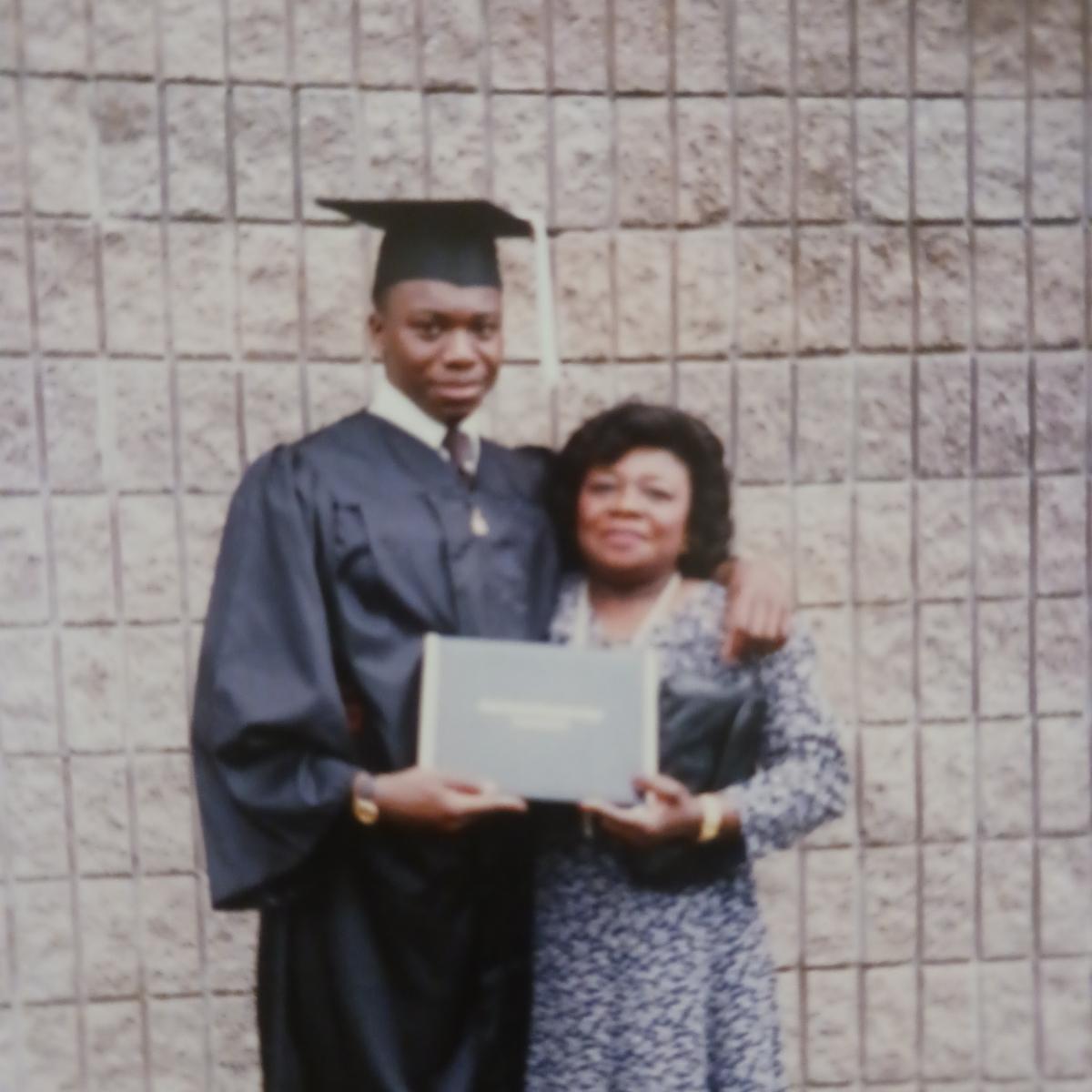
Then came a small miracle. I was granted a one-day furlough to walk the stage and receive my Associate’s Degree. My mother and oldest brother, Mario, came to witness it. That day felt like an eclipse—something rare and holy. The world was opening up for Jimmy Ace. The same boy who came in rough and wild, was walking across a stage in a cap and gown. We had a little time after the ceremony to get something to eat, it felt weird to get a real glimpse of regular people.
The year was 1988. Hip-hop was booming. Crack was destroying.
And I was 23.
Walking back into the world—with new eyes, new strength, and a new mind. The world was mine.
End of Preview.

Continue reading the great story of
Jimmy 'Henchman' Rosemond
Book will be available soon.